
Mehmet Acar, Forbes Türkiye
August 7, 2026
When a new game begins, why is being good at the old one no longer enough?
After watching The Dink for a while, I stopped watching pickleball. What caught my attention was the game being played on the other side of the court.
On one side, a new sport was growing. On the other, people who had believed for years that they owned that court were debating whether this was really a game worth taking seriously.
Sometimes, this is how change arrives.
Not by breaking down the door. First, by being underestimated.
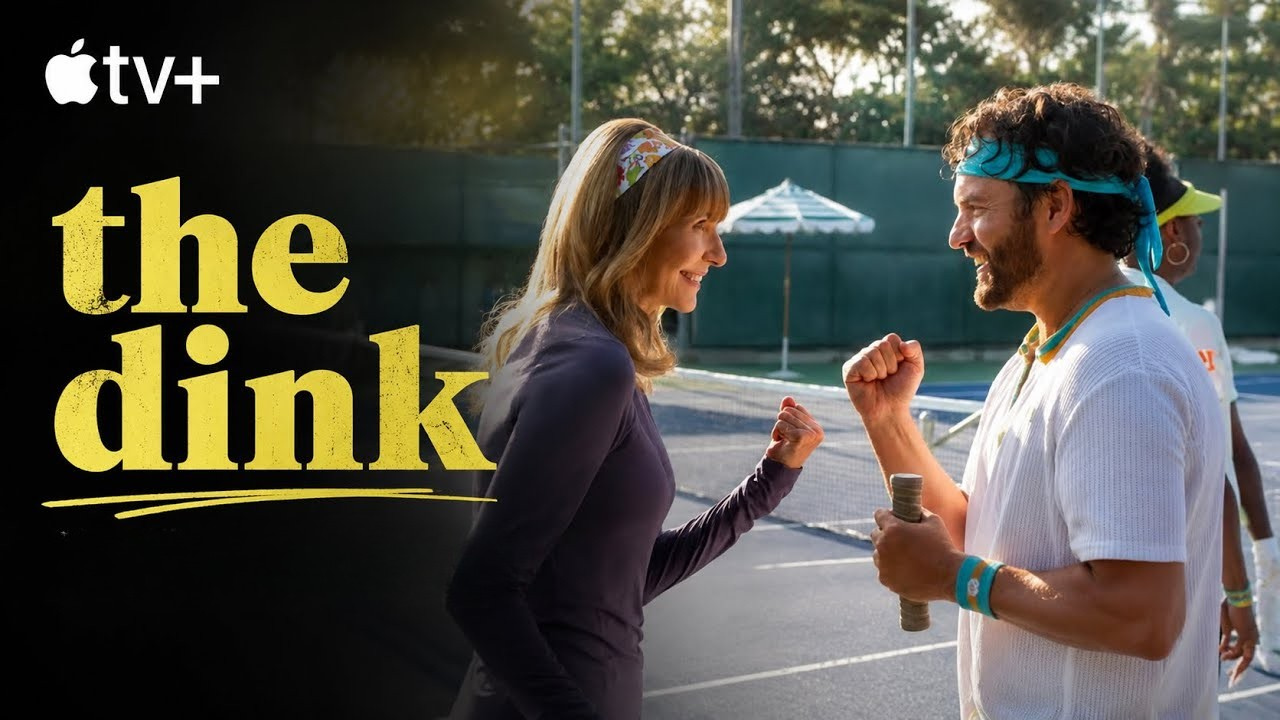
Released on Apple TV on July 24, The Dink is a sports comedy directed by Josh Greenbaum and written by Sean Clements. Jake Johnson stars alongside Ed Harris, Mary Steenburgen, and Aaron Chen. Ben Stiller also appears, along with familiar names from the tennis world such as Andy Roddick and John McEnroe.
At the center of the story is Dusty Boyd. Once a promising tennis player whose professional career never reached the heights he had hoped for, Dusty now teaches tennis to children at his father Chuck’s country club. For Chuck, tennis is not simply a sport; it is tradition, discipline, and almost a way of seeing the world.
Then pickleball enters that world.
A smaller court, a different paddle, a lower barrier to entry, and another game growing rapidly across America.
It is not that Chuck fails to see the new game. He sees the interest it is generating, the changing courts, the growing number of players. But when he looks at pickleball, he evaluates it not by its own rules, but by the rules of tennis.
Companies make the same mistake when faced with major change. When a new competitor emerges, we look not at how different it is, but at how well it does what we already do. When a new technology arrives, we measure it not by its own value proposition, but by the performance criteria of the existing technology.
When a new game emerges, our first instinct is often to measure it against the game we already know. How fast is it? How good is it? How efficient is it? How serious is it?
But sometimes, the new thing is not entering the same race. It is introducing a different measure of success.
The moment you begin to understand pickleball only through what it lacks compared with tennis, you risk missing the real change. Because what we need to focus on here is not whether one game is better than the other, but whether the measure itself is changing: why people play, what they value, and what they expect from a category.
I call this perceptual error the Legacy Lens: trying to understand what is new through the criteria of the world that made us successful in the past. The real risk is not failing to notice change. It is noticing change and still looking at it through the ruler of the old world.
For Dusty, however, the turning point is quite different. When his old tennis injury resurfaces, his path crosses again with pickleball, a game he had kept at a distance until then, this time as part of his rehabilitation. At first, he still sees it as a lighter, less serious relative of tennis. But as he begins playing with Candace, something unexpected happens: he realizes not only that he is good at the game, but that he enjoys it.
There is a small but important distinction here. What changes Dusty’s mind about pickleball is not learning more about the game. It is entering the game.
There can be a similar distance in companies between analyzing a new category from the outside and actually experiencing the value it creates. Sometimes the reason we fail to understand what is new is not that we lack sufficient data, but that we are still observing it from outside the experience, through the lens of the old one.
Some new value propositions are understood not by analyzing them, but by experiencing them.
Are We Protecting Our Identity, or Its Form?
While watching The Dink, you sense that Chuck’s real concern is not how much revenue pickleball might take away from his club. There is something deeper. Accepting pickleball would also mean questioning the world he has believed for years to be right.
Because over time, companies too can confuse what they do with who they are.
In the early 1990s, Danish company Bang & Olufsen faced a similar question. Having built a distinctive world by bringing together audio and visual technology with extraordinary design, the company began facing serious challenges in a new competitive environment where Japanese electronics manufacturers were gaining strength through advantages in scale, technology, and price. In 1993, the company launched a comprehensive transformation that became known in its history as the “Break Point.”
What makes this story interesting is not only the financial recovery, but the question of identity behind it.
If Bang & Olufsen defines itself as a company that makes televisions, radios, and music systems, then the declining importance of those products also threatens the company’s identity. But if its essence is about redefining the relationship between technology and people through design and experience, then the product can change while the essence remains.
In my consulting work, I frequently see two things that companies come to confuse over time: their identity and the form that identity takes.
The product a company makes today, the technology it uses, or the channel through which it reaches its customers does not have to be its identity. These are the forms that the company’s essence takes during a particular period.
A printed newspaper is not journalism itself.
The internal combustion engine is not the essence of an automobile company.
Nor does a tennis court have to be the reason a country club exists.
The problem begins when, over time, we start mistaking the form for the essence itself. Companies sometimes believe they are protecting their identity when in fact they are merely protecting the form they have grown accustomed to.
This distinction does not apply only to technology companies. It may be even more visible in the luxury world, where heritage is almost as important as the product itself.
Founded in Madrid in 1846, LOEWE has a craftsmanship heritage stretching back nearly two centuries. Such a legacy can easily become a past that must be preserved, even a weight that makes change more difficult. Yet there is another approach that stands out in LOEWE’s relationship with its heritage. One of the evaluation criteria for the annual Craft Prize organized by the LOEWE Foundation is not simply technical mastery. The foundation looks for innovation that updates tradition, reinterpreting existing knowledge to make it meaningful for today.
I find this idea particularly important when thinking about the relationship companies have with their past.
Because the opposite of heritage is not change.
Sometimes the only way to keep a heritage alive is to reinterpret it.
That is why remaining faithful to the past and remaining faithful to the form the past once took are not the same thing. The first can carry a company’s essence into the future. The second can keep it trapped inside the world in which it once succeeded.
So, in my view, the question companies should ask themselves about their heritage is:
Is our past an outcome we need to preserve, or raw material we can use to create the future?
Dusty’s transformation is not really about rejecting his past either. When he begins playing pickleball, the game vision, coordination, racket feel, and competitive experience he developed through years of tennis do not disappear. The same capabilities find a new expression in a different game.
The difficult part of transformation is not letting go of the past; it is distinguishing what from the past is worth carrying forward.
We can look at the software-defined vehicle transformation taking place in the automotive industry today through the same lens. A comprehensive review published in May 2026 by Eirini Liotou, Dimitra Tzelalidou, and Gerasimos Christodoulou shows how automotive architecture is evolving from large numbers of independent electronic control units toward domain-based and zonal architectures, and from there toward centralized computing platforms. In this new architecture, software is no longer simply a feature added to hardware; it is becoming one of the fundamental layers that enables the vehicle to evolve throughout its lifecycle through OTA updates, artificial intelligence, and connected services.
Another study published in Frontiers in Mechanical Engineering in July 2026, reviewing 100 studies conducted between 2019 and 2025, makes the physical implications of this change more visible: next-generation powertrain domain controller architectures can reduce component counts by more than 60 percent and costs by approximately 30 percent, while also enabling OTA updates.
This does not mean that a century of automotive engineering expertise has lost its value. Safety, engineering, manufacturing quality, and driving experience still matter. But a new question is being added to the value equation.
Alongside the question, “What does the product do today?” we must now ask another:
“What will the product be able to do tomorrow?”
Our experience gives us the ability to distinguish what should be carried forward from the past and what belongs only to the old game.
A similar question is emerging in the media world today.
For many years, one of the core capabilities of a news organization was deciding what mattered. Editors selected, prioritized, and presented an agenda to readers. When algorithmic recommendation systems entered this relationship, the debate could easily become trapped between two choices: editor or algorithm?
That is why an A/B test conducted in 2025 within the real digital environment of a major traditional media organization in Norway is particularly interesting. The researchers called the model that combined editorial curation with algorithmic recommendations Controlled Personalization.
The result was not simply a higher click-through rate. While the effort users needed to expend to reach content decreased, the diversity of recommended content and the portion of the catalog being used increased; excessive concentration on popular content also declined. What interests me here is not whether the algorithm performed better than the editor. Quite the opposite. I think we have been asking the wrong question from the beginning.
Editor or algorithm?
Instead:
What can editorial judgment and algorithmic discovery do better together?
This small change in the question also reveals a misconception we frequently encounter during technological transformations. We do not have to interpret the emergence of something new as the disappearance of what came before it. Sometimes the new game does not make an existing capability obsolete; it amplifies its impact.
For the same reason, I see the space artificial intelligence is opening in professional services less as a question of substitution and more as a new field of capacity.
Conducting research, scanning hundreds of pages of documents, collecting benchmarks, carrying out initial analyses, and generating alternative scenarios have required significant amounts of expert time for years. Today, artificial intelligence can support a substantial part of these processes at extraordinary speed. This expands the territory an experienced professional can reach.
As access to information accelerates, human time can shift away from gathering information and toward making sense of it: seeing connections between different signals, finding the right question, and distinguishing what truly matters for the organization.
AI enables us to reach more information, faster. Experience enables us to see what within that information actually matters.
AI can read hundreds of reports. But understanding why what a CEO does not say in a management meeting may matter as much as what they do say is a different capability.
It can generate dozens of strategic options. But evaluating which one can actually work within the culture, leadership, history, and invisible relationships of a particular organization requires a different kind of judgment.
Perhaps for years, competitive advantage in professional services was built around the statement:
“I know things you don’t know.”
In the age of AI, a much more powerful capability is being added:
“I can see what you cannot see.”
When I look at the future of consulting, AI can increase the speed at which we reach answers. Experience enables us to understand which questions are worth asking. For this reason, I do not believe the strongest consulting model of the future will be a choice between humans and artificial intelligence.
Experienced human × artificial intelligence.
AI will expand the field of possibilities. The experienced consultant will select from those possibilities what is meaningful for the organization. The human will then turn what has been selected into a change that other people can believe in, trust, and act upon. Because a recommendation being theoretically correct is not the same as it actually working within a particular organization.
At this point, artificial intelligence brings an important change to professional services. Technology is not an alternative positioned against experience; it is a new capacity that expands the reach, speed, and impact of experience.
Just as Dusty’s tennis background does not disappear when he moves into pickleball in The Dink.
When he enters the new game, he does not leave everything he learned in the old game at the door. The years tennis gave him do not suddenly become meaningless in the new game. On the contrary, they regain value in a different context.
The new game does not make all old capabilities worthless. It reveals which ones are truly valuable.
Through Which Lens Are You Watching the New Game?
When I watched The Dink, I was left with a question larger than the rivalry between tennis and pickleball.
Why is it that when people and organizations encounter something new, they sometimes defend what they already know more strongly instead of trying to understand it?
Not because they cannot see the change. Because they do not like what the change they see says about their own identity.
I do not believe the winners of the future will be those who abandon their past. Quite the opposite. They will be those who can distinguish what in their past is truly essential from what was merely the form of a particular era. Because heritage is valuable. Experience is valuable. Mastery and human judgment are valuable. At the same time, carrying all of these into the future does not mean preserving exactly the form they took in the past.
That is why it is no longer enough for leaders today to ask only:
“What are our competitors doing?”
The more important question is:
Is what we consider an indispensable part of our identity today truly our essence, or is it simply a form left to us by the world in which we were successful in the past?
And one more question for you:
What game are we still trying to win, and are our customers still playing the same game?
Because companies do not always lose because they are worse than their competitors.
Sometimes they are still the best at their old game.
They are simply looking at the scoreboard while, somewhere else, a new court has opened.
Link : https://www.forbes.com.tr/icerik-ureticileri/yeni-oyun-eski-mercek
