
Mehmet Acar, Forbes Türkiye
July 10, 2026
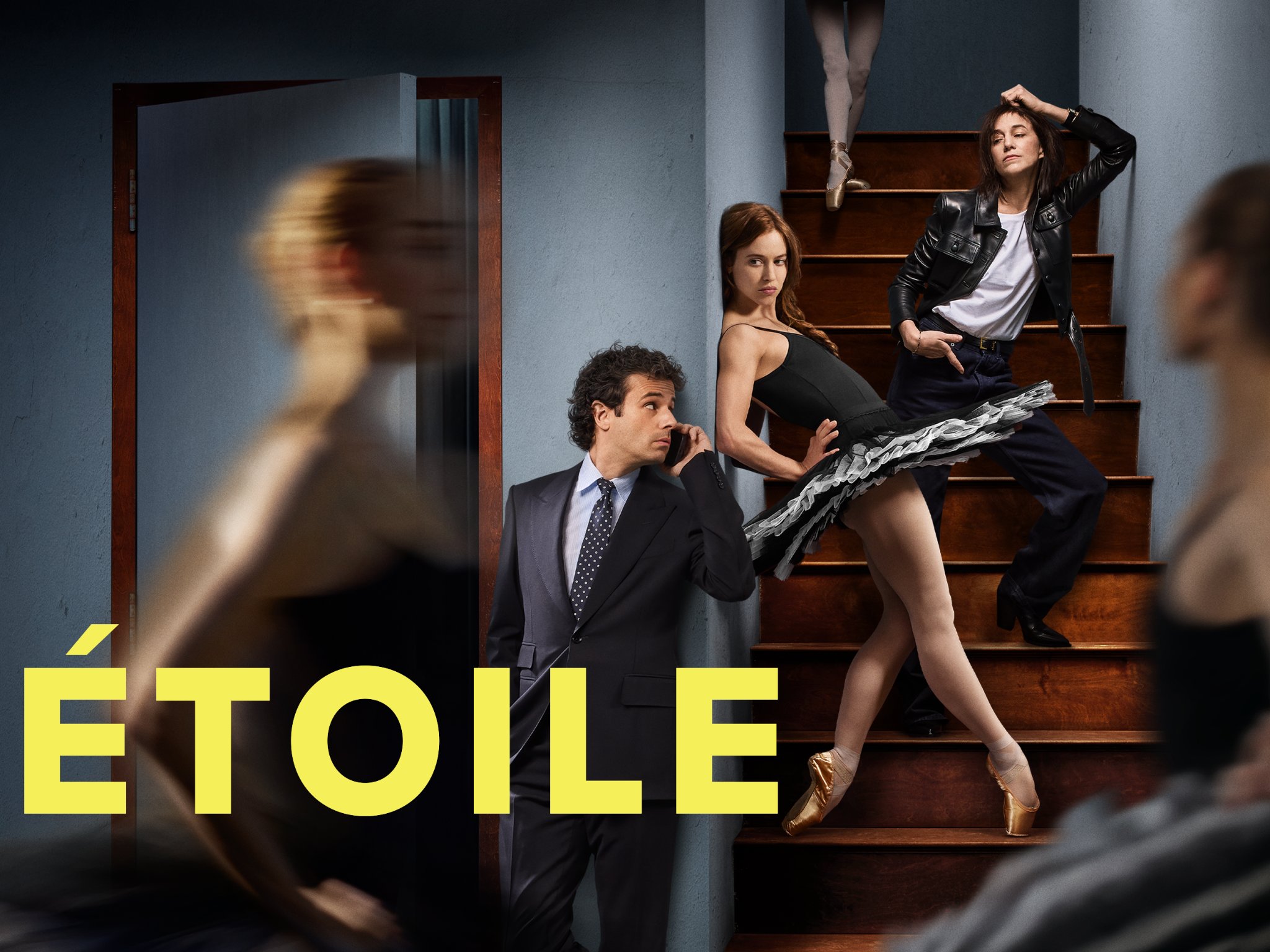
Amazon Prime Video’s Étoile explores why success doesn’t travel with people alone, but with the invisible habitats that surround them.
What happens when you take a ballet dancer from one side of the world and place them in another country?
In recent years, one of the most widely discussed topics in business has been talent mobility. Companies recruit successful executives from competitors, bring in specialists from different countries, and sometimes even hire entire teams rather than individual employees.
Behind this approach lies a powerful assumption:
If you bring successful people into your organization, success will naturally come with them.
But does it?
To me, Amazon Prime Video’s Étoile challenges this assumption from an unexpected angle.
Created by Amy Sherman-Palladino and Daniel Palladino, the series initially appears to tell the story of two prestigious ballet institutions in Paris and New York. After watching only a few episodes, however, you realize that ballet is not really the subject.
Ballet is simply the language through which a much deeper idea is told.
The real subject of the series is where performance is actually created.
The premise is remarkably simple.
Two world-renowned ballet companies, both struggling with declining audiences and increasing financial pressure, make a bold decision. The Paris company and the New York company agree to exchange their most accomplished dancers, choreographers, and creative talents for a limited period of time.
On paper, the idea seems flawless.
The same people.
The same talent.
The same experience.
So why shouldn’t the results be the same?
As Étoile unfolds, we gradually begin to discover the answer.
The opening episodes are not driven by dramatic crises or fast-paced events. Instead, they reveal something far more authentic.
A dancer arriving from Paris steps into their first rehearsal in New York.
A choreographer from New York begins working with a team in Paris.
No one suddenly loses their talent.
No one becomes less capable overnight.
Yet small disruptions, quiet tensions, and subtle incompatibilities begin to emerge.
In one company, rehearsals begin precisely on time.
In the other, creative debate is considered a natural part of the artistic process.
One team sees mistakes as an essential path to learning.
The other treats perfection as the baseline expectation.
Interestingly, no one openly explains these differences.
Yet everyone feels them.
As viewers, we begin to experience these emotions ourselves. After a while, Étoile stops being merely a story about ballet and starts becoming a story about life itself.
Because we have all lived through the same experience.
When we start a new job…
When we move to another country…
When we become part of a new team…
The first challenge is rarely the work itself.
It is the invisible rules of the new environment.
Who speaks first?
How are decisions made?
How safe is it to make mistakes?
How do people give one another feedback?
What exactly defines success?
You won’t find the answers to these questions in any employee handbook.
Yet they shape performance more than almost anything else.
Context Migration
As I reflected on everything I had written so far and after watching the scenes from Étoile several times I realized that I had been searching for a concept to describe something I had been thinking about for a long time.
I call it Context Migration.
Because people can change companies.
They can change countries.
They can change teams.
But the context that enables them to succeed does not move nearly as easily.
Knowledge can be transferred.
Experience can be transferred.
Résumés can be transferred.
But the invisible rhythm of work, the relationships built on trust, the shared habits, and the cultural reflexes that shape everyday performance cannot simply be packed into a suitcase.
That is why even the world’s most accomplished professionals often have to prove themselves all over again when they join a new organization.
If I had to identify Étoile’s greatest strength, I would say that it reminds us that performance is never purely an individual attribute.
This thought led me to football.
When people think about Pep Guardiola’s career, they usually think first about the trophies he has won. The style of football he built at Barcelona later produced extraordinary success at Manchester City as well.
Of course, Guardiola did not bring his players with him.
Nor did he bring the club itself.
But he did carry something else.
His discipline.
His meticulous attention to detail.
His training culture.
A shared language of the game.
In other words, he transferred far more than football knowledge.
He transferred a working climate.
The dancers in Étoile, however, experience precisely the opposite.
They bring their talent to a new city.
But they cannot bring with them, nearly as easily, the invisible environment that has been nurturing that talent for years.
As I explored these ideas more deeply, I realized they naturally led to a second concept.
Performance Habitat
For years, we have spoken about performance as though it were an inherent quality that individuals simply possess.
Étoile led me to think about performance differently.
Performance is not something that lives inside people.
It is the outcome produced by the invisible environment surrounding them.
That is why I propose the concept of the Performance Habitat.
A Performance Habitat is the collection of invisible conditions that consistently enable people to realize their full potential.
Trust.
A shared rhythm of work.
A culture of constructive feedback.
A common sense of purpose.
Curiosity.
And leadership.
None of these elements, on their own, creates exceptional performance.
But when they come together, they form an environment in which even ordinary people become capable of extraordinary achievements.
For years, we have been asking the wrong question.
“How do we find the best people?”
Perhaps we should first be asking something entirely different.
“How do we design an environment where great people can consistently perform at their very best?”
While searching for an answer to that question, my mind immediately goes to a world completely different from Étoile.
Pixar.
During the most critical stages of making a film, Pixar’s directors and creative teams gather together in the same room.
These meetings are known as the Braintrust.
The purpose is not to validate one another.
The purpose is to make the story better.
Titles carry no weight in that room.
Defensiveness has no place there.
Only the story matters.
No one’s suggestion is automatically accepted.
The only non-negotiable rule is honesty.
Pixar has spent decades producing extraordinary stories not simply because it hires extraordinarily creative people, but because it has built a habitat that continuously nourishes creativity.
As I think about Pixar, another scene from the later episodes of Étoile keeps returning to my mind.
One of the newly arrived dancers performs flawlessly from a technical standpoint, yet fails to receive the response they expected during rehearsal.
No one says the dancer lacks talent.
No one questions their ability.
Because the problem exists somewhere invisible.
Having just joined the company, the dancer has not yet learned how to read the team’s rhythm.
They do not yet know when to take initiative or when to step back.
Nor can they fully distinguish between feedback that is personal and feedback that is purely artistic.
Gradually, you realize something profound.
In Étoile, people are not failing.
They simply have not yet learned how to understand the habitat they have entered.
Years ago, people living in Florence understood something that many of today’s leaders are only beginning to recognize.
When we talk about the Renaissance, we usually mention Leonardo da Vinci, Michelangelo, or Botticelli.
But have you ever wondered why all of these extraordinary figures emerged during the same period, in the same city?
Explaining it solely through individual genius is easy.
But I believe it is incomplete.
The Medici family did far more than simply support artists.
They created a cultural environment where artists could meet, challenge one another, learn from each other, and take creative risks.
Looking back through history, we can now see more clearly that the Renaissance was not created by extraordinary individuals alone.
It was created by the invisible environment that allowed extraordinary individuals to flourish.
To me, Étoile conveys exactly the same message.
At first, we see brilliant dancers.
But beneath those dancers lies a much deeper, invisible stage.
That is why I believe the concept of the Performance Habitat extends far beyond organizations.
It is equally relevant to life itself.
Very often, people are not in the wrong company.
They are simply in the wrong habitat.
Their problem is not a lack of talent.
It is the absence of an environment capable of making that talent visible.
This explains why the very same person may appear completely ordinary in one organization while achieving extraordinary success in another.
Let’s revisit one of the most fascinating organizational studies ever conducted.
Google’s Project Aristotle.
Years ago, Google analyzed hundreds of teams in search of a single answer:
What truly makes the highest-performing teams different?
The initial assumptions were familiar.
The best universities.
The highest IQs.
The most experienced employees.
The strongest leaders.
But the conclusion surprised almost everyone.
The single most important predictor of team performance was neither experience nor individual intelligence.
It was psychological safety an environment where people felt comfortable speaking openly, making mistakes without fear, and trusting one another.
In other words…
Habitat.
Isn’t it remarkable that Google’s research and Étoile ultimately arrive at the very same conclusion?
People alone do not determine performance.
The invisible environment in which they work shapes it just as profoundly.
That is why I believe our understanding of leadership must evolve.
For decades, leadership has largely been defined as the ability to manage people.
I believe a leader’s primary responsibility is something different.
It is to design the habitat in which people can thrive.
To make this idea more tangible, I have developed a simple framework of my own.
I call it The Performance Habitat Framework.
It is not a management model.
Rather, it is a way of thinking about the common conditions from which exceptional performance consistently emerges.
The first element is Trust.
If people are afraid of making mistakes, they will never reveal their true potential.
The second element is Shared Rhythm.
One of the most powerful ideas Étoile illustrates is that success is not simply about pursuing the same goal.
It is also about moving together at the same pace.
The third element is Developmental Feedback.
Pixar’s Braintrust culture remains one of the finest examples.
The purpose is never criticism.
The purpose is creating something better together.
The fourth element is Shared Meaning.
People do not sustain exceptional performance for years simply because they receive a salary.
Something fundamentally different happens when they believe their work is part of a larger story.
And finally…
Curiosity.
Today, many people attribute NVIDIA’s remarkable success to artificial intelligence or to the chips it designs.
To me, those are merely the visible outcomes.
The company’s true competitive advantage is the learning culture it has preserved for decades.
Jensen Huang frequently speaks about technical depth, long-term thinking, creating structures that encourage engineers to learn from one another, and maintaining a shared curiosity for solving difficult problems.
Those principles have done more than build a world-class technology company.
They have created a Performance Habitat capable of continuously renewing itself.
That is why so many companies today attempt to replicate NVIDIA’s products.
Yet the hardest thing to copy is not the products themselves.
It is the invisible habitat that made those products possible.
The most enduring lesson Étoile leaves me with is this:
Companies transfer people.
They transfer knowledge.
They transfer technology.
But more often than not, they fail to transfer the habitat where performance is actually created.
That is why some acquisitions fall short.
Why certain high-profile executive hires never deliver the expected impact.
And why some teams continue producing extraordinary results year after year—even when the individuals themselves remain unchanged.
Because performance is not simply something people carry with them.
Performance is potential that becomes visible only when it meets the right habitat.
The Real Home of Performance
When you finish watching Étoile, ballet is not what stays with you.
What lingers most is a deeply familiar question about life itself.
Why do some people seem to shine wherever they go, while others with the very same level of talent appear to lose a part of themselves the moment they enter a new environment?
That question is, in many ways, the heart of everything I have tried to explore throughout this article.
And I believe we have been looking for the answer in the wrong place for years.
We search for success inside people.
Étoile invites us to consider another possibility.
Performance is not merely an individual attribute.
It is the product of the relationship between a person and the environment in which they perform.
That is why, throughout this article, I have proposed two new concepts.
The first is Context Migration.
It describes how people can transfer their knowledge, experience, and expertise when they move from one place to another, while the invisible context that enabled their success cannot be transferred nearly as easily.
The second is Performance Habitat.
The invisible environment that enables people to consistently realize their full potential.
In the future, what will distinguish great organizations from the rest will not be their ability to hire the brightest people.
It will be their ability to design habitats where those people can consistently become the brightest version of themselves.
Talent matters.
Knowledge matters.
Experience matters.
But all of them derive their true value only within the right habitat.
Some people do not carry success with them wherever they go.
They discover their greatest success when they find the environment where they truly belong.
Designing stages where people can become stars may well become one of the defining leadership responsibilities of the future.
On the surface, Étoile is a series about ballet.
But beneath that surface, it reminds us of something far more universal.
People change.
Companies change.
Cities change.
Yet performance never travels alone.
Its journey continues only when the invisible habitat that sustains it is able to move with it.
Perhaps the most important question we should ask ourselves throughout our careers is this:
Am I simply looking for a job where I can be more successful…
Or am I searching for the right habitat that can bring out the very best version of who I am?
As we reach the midpoint of 2026, I find myself realizing this once again:
Performance has never fit into a suitcase.
For years, we have simply been looking for it in the wrong place.
Link : https://www.forbes.com.tr/icerik-ureticileri/performans-bavula-sigar-mi
