
Hanzade Acar
June 8, 2026
While wandering through a bookstore in Los Angeles, I found myself thinking about a restaurant in New York.
At first glance, the two places seemed completely unrelated.
One was filled with bookshelves stretching all the way to the ceiling.
The other held Michelin stars.
In one, people lost themselves for hours.
In the other, reservations were made months in advance.
Yet both places made me feel exactly the same thing:
You are not merely a customer here.
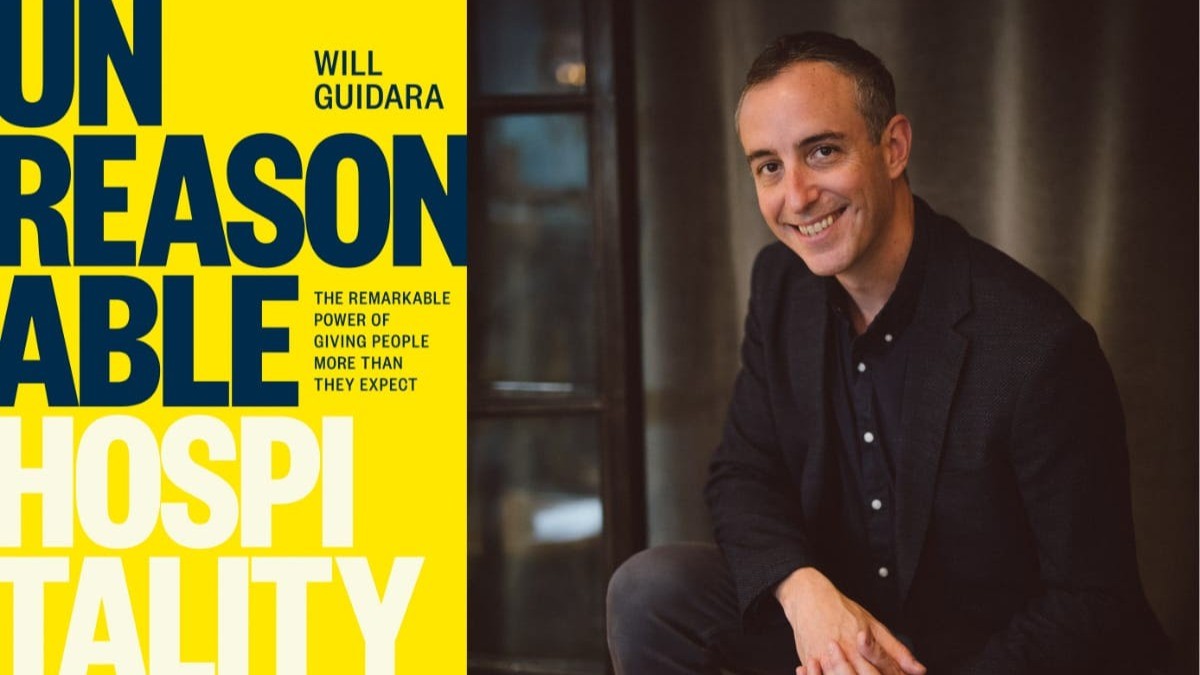
I recently read Will Guidara’s Unreasonable Hospitality, and as I moved through its pages, I wanted to understand where that feeling came from.
At first glance, the book appears to tell the story of New York’s famous Eleven Madison Park. In reality, it explores something much more profound:
Why do people never forget certain experiences while others fade from memory within days?
A significant part of Guidara’s career unfolded at Eleven Madison Park.
Located in New York’s historic Metropolitan Life Building in the Flatiron District, the restaurant became one of the most respected dining destinations in the world through Daniel Humm’s culinary leadership and Guidara’s operational philosophy.
Its Michelin stars, James Beard Awards, and international rankings are certainly impressive.
But those achievements are not the most interesting part of the story.
Guidara argues that Eleven Madison Park entered the ranks of the world’s best restaurants because of its food.
It became the best because of something else.
What set it apart was the attention paid to how people felt.
One of the first distinctions he makes in the book is between service and hospitality.
Service is doing your job correctly.
Hospitality is making another person feel valued.
Bringing a plate to the correct table is service.
Trying to understand what the person sitting at that table has experienced that day is hospitality.
At first, the difference seems simple.
But it is powerful enough to make us rethink the entire world of management.
And the lesson is not limited to restaurants.
One of Guidara’s early chapters, Welcome to the Hospitality Economy, explains this clearly.
According to him, regardless of the industry we work in, people increasingly remember us not because of the products we offer, but because of the experiences we create.
From Ancient Greece to Modern Business
Those interested in history may recognize that this idea is not entirely new.
In Ancient Greece, hospitality known as Xenia was considered sacred.
A stranger arriving at someone’s home would first be welcomed, allowed to rest, and given food before anyone even asked who they were.
People believed that a guest might have been sent by the gods.
Hospitality was not considered a profession.
It was considered part of being human.
Thousands of years later, very little has changed.
People still want to be seen.
They still want to feel important.
They still want to belong.
One of my favorite sections of the book, The Extraordinary Power of Intention, explains that unforgettable experiences do not happen by accident.
Guidara believes that extraordinary experiences are not created by extraordinary people.
They are created through intentional choices.
As I read those pages, I found myself remembering a consulting project from two years ago, when I worked on culture and storytelling initiatives for a two-Michelin-star restaurant.
The kitchen functioned smoothly.
Everyone followed established standards.
The quality was exceptional.
Yet those things were not what made the restaurant special.
The difference was in the stories.
Every dish existed within a larger narrative.
Employees were not simply serving food.
They were transmitting a culture.
Guests were not merely eating.
They were becoming part of a story.
A Lesson from Los Angeles: Sora Craft Kitchen
A recent visit to Sora Craft Kitchen in Los Angeles reminded me of exactly the same principle.
The fact that Chef Okay İnak previously worked in some of the world’s most prestigious kitchens, including Eleven Madison Park and Per Se, is impressive.
What is even more remarkable is his ability to bring that philosophy into a restaurant operating on a much smaller scale.
The restaurant’s recent inclusion in the Michelin Guide’s recommendation list is not simply the result of technical skill.
It comes from something else.
The attention you feel from the moment you walk through the door.
The way you are welcomed.
The care shown toward details.
The personalization of the experience.
It is the kind of example that demonstrates how Guidara’s philosophy of unreasonable hospitality is fueled not by large budgets, but by intention.
A culture learned at Eleven Madison Park can come alive years later in a small restaurant in Los Angeles.
Creating Places Where People Belong
In another section of the book, Guidara talks about creating places where people feel they belong.
While reading that chapter, I immediately thought of one of the most fascinating places in Los Angeles: The Last Bookstore.
Today, it is one of the city’s most visited cultural landmarks.
Yet it did not begin as a large investment project.
Its founder, Josh Spencer, started by selling used books and gradually built something much larger than a bookstore.
People do not come here simply to buy books.
Amazon sells books.
Chain stores sell books.
So why do people spend hours here?
Why do they wander between the shelves?
Why do they take photographs?
Why do they return again and again?
Because The Last Bookstore is not selling books.
It is selling belonging.
It is selling curiosity.
It is selling discovery.
It gives people permission to slow down.
A bookstore in Los Angeles became a cultural icon by creating a world people wanted to inhabit.
This, too, reflects Guidara’s definition of hospitality.
Hospitality is not about giving people what they ask for.
It is about creating a world they want to be part of.
What Oura Ring Taught Me About Hospitality
One section of the book that particularly captured my attention focuses on understanding what people need before they tell you.
Many people associate this idea exclusively with restaurants.
I no longer do.
That is why I find the example of Oura Ring so interesting.
Most people see Oura as a technology product that provides health data.
I see something different.
Oura’s success is not in its sensors.
It is in the relationship it creates.
What is the essence of hospitality?
Recognizing another person’s needs before they express them.
A great hotel does this.
A great restaurant does this.
A great leader does this.
And this is exactly what sits at the heart of Oura’s relationship with millions of users.
The company does not merely provide data.
It helps people understand themselves better.
As a result, users do not feel as though they are simply using a device.
They feel as though they are interacting with a system that genuinely cares about them.
It is a very different interpretation of hospitality.
Yet isn’t it built upon the same philosophy?
Patagonia: Hospitality at Its Broadest Scale
Patagonia represents both the same and a very different side of the story.
To describe Patagonia simply as an outdoor apparel company would be incomplete.
Founded in 1973 by climber and environmentalist Yvon Chouinard, the company is now regarded as one of the world’s most influential examples of purpose-driven business.
Although Patagonia produces technical jackets, climbing gear, and outdoor equipment, its true product has never been clothing alone.
From the beginning, the company placed its relationship with nature at the center of its identity.
Environmental sustainability, responsible production, and long-term consumption became inseparable elements of its business model.
As a result, Patagonia’s customers do not view the company merely as a supplier.
They see it as the representative of a community that shares their values.
Its famous “Don’t Buy This Jacket” campaign was not an anti-sales statement.
It was simply a natural extension of a philosophy the company had advocated for decades:
Consume less.
Consume more consciously.
Why would a company encourage customers to buy less?
Because Patagonia’s priority was never sales alone.
The principle championed by Yvon Chouinard for decades has always been clear:
Planet first.
Sales second.
Many companies try to treat customers well.
Patagonia tries to treat the world well.
That is why customers do not feel like customers.
They feel like participants in a system of shared values.
Here we encounter hospitality in its broadest definition:
Putting another person’s long-term well-being ahead of our own short-term interests.
A Museum That Feels Different: The David Geffen Galleries
As Guidara approaches the final chapters of his book, he argues that hospitality has nothing to do with scale.
A restaurant.
A store.
A bookstore.
A brand.
A museum.
It makes no difference.
What matters is how people feel.
Speaking of feelings, I want to mention one of the most distinctive museum experiences of recent years: the new David Geffen Galleries at the Los Angeles County Museum of Art (LACMA).
The David Geffen Galleries are more than simply a new museum building.
They are a physical expression of LACMA’s vision for the future.
Named after American businessman, producer, and arts patron David Geffen, the structure sits at the heart of the museum’s 347,000-square-foot campus and is considered one of the largest single-level art galleries in the world.
Designed by Swiss architect Peter Zumthor, the building intentionally challenges the traditional museum experience.
Instead of offering visitors a predetermined path, it invites exploration.
The galleries are expansive.
Natural light pours inside.
Windows frame views of Los Angeles.
Unexpected connections emerge between artworks.
Visitors often stop feeling as though they are in a museum.
Instead, they find themselves immersed in culture.
Perhaps that is why Dior chose the venue for its Cruise collection presentation.
The David Geffen Galleries were designed as a place where art, fashion, architecture, and public life intersect.
The goal is not simply to present works of art.
The goal is to make people feel part of something larger.
Founded in 1965, LACMA has long sought to become more than a museum that merely displays art.
The David Geffen Galleries are the newest symbol of that vision.
They are a living example of Guidara’s central idea.
Hospitality is not about giving people more than they expect.
Hospitality is about making people feel special and valued.
The Feeling We Remember
Some restaurants.
Some brands.
Some bookstores.
Some museums.
Remain in our memories for precisely this reason.
Because what we actually remember is rarely the product itself.
What stays with us are the feelings.
When I closed Will Guidara’s book, what remained in my mind was not a restaurant in New York.
Nor was it the bookstores, museums, brands, or people I had encountered in Los Angeles.
What remained was a much simpler idea:
People often forget the products they buy.
But they remember how they felt forever.
That is why some organizations simply provide a service, while others become unforgettable.
Most of the time, the difference does not come from budget, technology, or scale.
It comes from the level of care shown to people.
That is what real unreasonable hospitality looks like.
