
Hanzade Acar
April 2, 2026
These days, amid the crowd, everyone seems to be asking the same question:
Do you see me? Do you know that I am here?
These questions no longer affect only our personal lives. They have become one of the most influential issues shaping the business world and company culture.
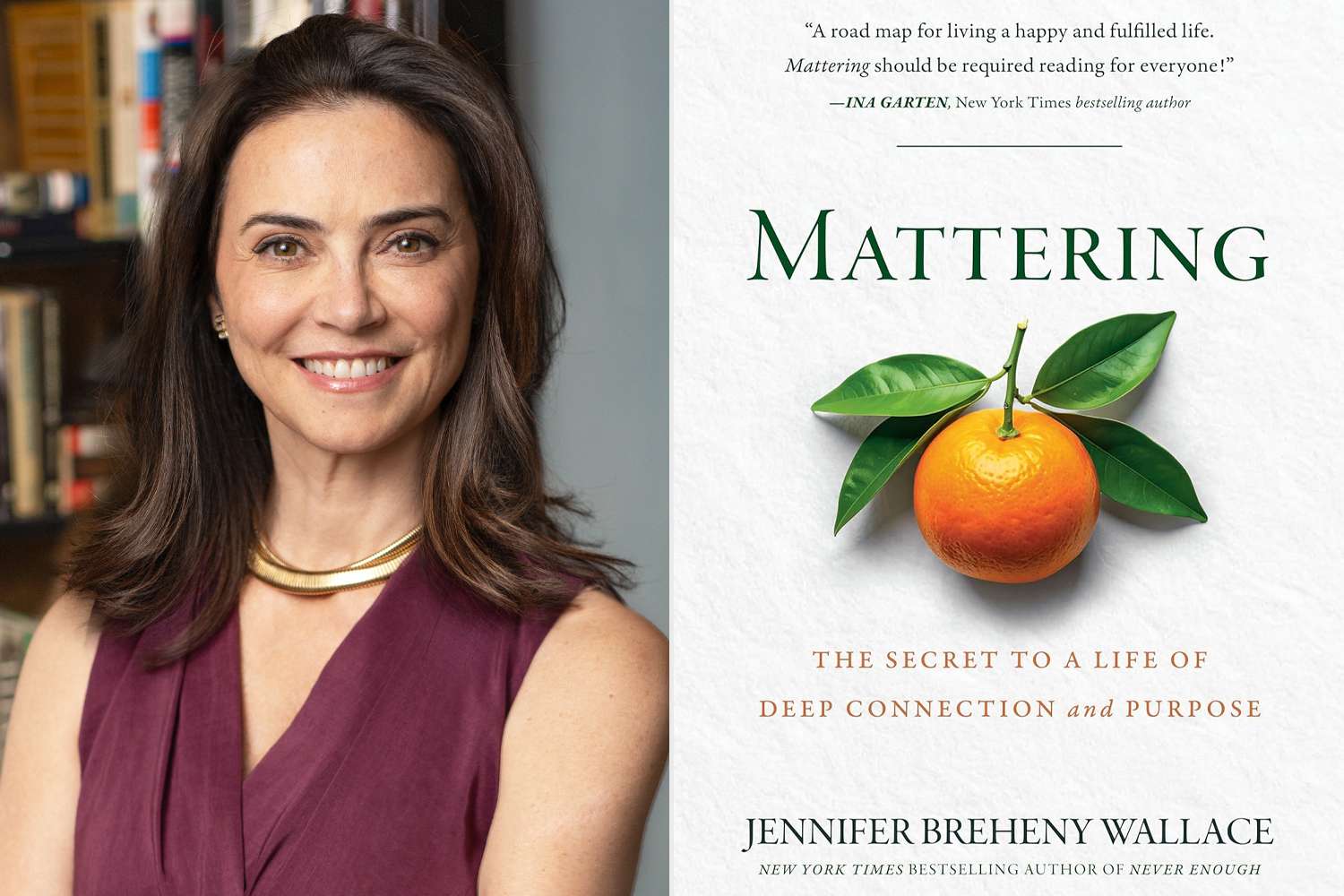
Jennifer Breheny Wallace’s Mattering: The Secret to Building a Life of Deep Connection and Purpose, published in 2023 and quickly added to The New York Times bestseller list, is an important resource for anyone searching for answers. In her appearance on CBS’s 60 Minutes, Wallace explains that people experiencing burnout often feel that they are no longer contributing value to anything meaningful.
Throughout my eighteen years as a consultant, I have encountered this feeling of invisibility countless times. Wallace gives it a scientific explanation.
Echo’s Silence and Narcissus’s Blindness
The human spirit begins to doubt its own existence when it is not reflected back by others.
Think of the tragedy of Echo from Greek mythology. Echo was a nymph without a voice of her own, capable only of repeating the last words spoken by others. Her love for Narcissus was, in reality, a longing to be heard and recognized. Yet Narcissus, trapped in his obsession with his own reflection, never truly saw her.
Because she was neither seen nor heard, Echo slowly faded away until nothing remained except her sorrowful echo.
Today, in modern office towers, among thousands of emails and endless mechanical meetings, there are countless professionals who feel exactly like Echo. They repeat what they are told, yet their unique presence goes unnoticed.
In this article, I wanted to explore the concept of emotional contrast more deeply.
On one side stand impressive titles and the illusion of success.
On the other stands the individual who moves through the room like a ghost, unable to answer the question:
“If I disappeared from this company, what would actually be missing?”
As someone who has spent years working in strategy consulting and studying how stories touch those piano keys within the human soul, the reason I wanted to discuss this book is simple:
Success alone is no longer enough.
We want to feel that we matter.
Wallace builds this concept on two fundamental pillars:
- Feeling valued.
- Knowing that you contribute value to the world.
If either one is missing, a form of spiritual hunger begins.
This reminds me of the concept of Eudaimonia in Ancient Greek philosophy. Although it is often translated as “happiness,” Aristotle used the term to describe something deeper: living in alignment with one’s inner daimon one’s true potential.
It is not merely about pleasure.
It is a way of life.
Imagine a sculptor working in an Athenian square. Someone approaches and asks:
“Why are you working so hard? No one will ever notice those small details.”
The sculptor pauses and replies:
“The gods will.”
That is what mattering is.
Even when nobody sees it, you know that your work is part of something larger, that the marble has gained a soul through your touch.
The Light on the Firefighter’s Helmet
One of the most powerful moments in the book demonstrates why this philosophy is ultimately a matter of survival.
Wallace describes meeting a firefighter after a major fire.
His helmet was covered in soot.
His exhaustion was impossible to describe.
Yet when he began talking about the moment he held a child’s hand inside the ruins, or the moment he saved a family’s most treasured memories, the fatigue in his eyes transformed into something else entirely.
It became what I would call the alchemy of meaning.
At that moment, his work was no longer just a job.
He was the person who had prevented another family’s life story from turning to ashes.
That feeling of being indispensable is one of the purest forms of fuel we possess. Biologically, it lowers cortisol and increases dopamine.
In consulting, we often call this impact-driven work.
Wallace takes it somewhere even more human: mattering.
If that firefighter saw himself merely as a public employee whose role was to extinguish fires, he could never have remained in that smoke-filled environment for so long.
What kept him there was knowing how important he was to someone else’s life.
In art, I often compare this to the use of light in Rembrandt’s paintings.
The Dutch master would bring a figure out of the deepest shadows with a beam of light. That light seems to say:
“You are here, and you matter.”
Today’s leaders must learn to shine Rembrandt’s light on their employees.
Because, as Wallace explains, when people are motivated by “dirty fuel” fear, excessive competition, and status anxiety they may keep moving for a while, but eventually they suffer a kind of spiritual carbon monoxide poisoning.
The clean fuel is the feeling of being seen.
A Corporate Awakening: How Companies Began to Recognize the Gap
So what have visionary leaders and business owners begun to understand about this crisis of invisibility?
In the years following the pandemic, they realized that high salaries and stylish offices were no longer enough to retain talent.
They also recognized that the wave of quiet quitting was, at its core, a silent cry of not being seen.
Leaders are beginning to understand something important:
Employees do not want to leave their souls hanging beside their coats when they arrive at work in the morning.
Companies that understand this are increasingly exploring paths through collective wisdom and shared storytelling.
Some large organizations have even moved away from traditional “winner meetings,” where only successes are celebrated.
Instead, they are creating spaces where challenges, effort, and human experiences can be shared openly.
The underlying message is powerful:
“We value you not only because of your achievements, but because of your effort, your mistakes, and your humanity.”
When a business owner approaches a factory operator and says:
“If it weren’t for your small contribution, this product wouldn’t have the same soul,”
they ignite precisely the kind of clean fuel Wallace describes.
Some technology companies have even changed the way projects are reviewed.
Rather than asking:
“Who should we thank?”
they ask:
“Whose presence made a difference in this project?”
In doing so, they create a space where people are valued independently of titles and hierarchy.
The solution is not to eliminate hierarchy altogether.
The solution is to elevate the human being within it.
The Younger Generation Is Seeking Validation of Their Existence
At this point, it is worth pausing to consider my son’s generation.
My son is twenty-four years old, and his generation is rapidly becoming the new protagonist of the business world.
Unlike previous generations, they are not working simply for the sake of working.
For them, mattering the sense that their work has meaning is as fundamental a need as food or water.
They do not want to be a cog in a machine.
They want to be a character in a story.
If you tell someone:
“Just write this code,”
they will finish the task and leave.
But if you tell them:
“The code you write will make someone’s life easier,”
they are more likely to stay, engage, and continue.
These young people do not want to be like Echo, endlessly repeating what others have said.
They want to hear their own voices.
And they want to be somewhere where someone says:
“We’re glad you’re here.”
The Piano Keys of Human Connection
This is the idea I try to communicate through my own work as well.
Each of us is a key on a piano.
Black or white.
High or low.
Thin or thick.
But the great piece of music only emerges when we need one another’s sound.
Through Wallace’s guidance, I was reminded of this once again.
To be able to say to someone,
“I’m glad you exist. The story feels complete when you are part of it,”
may be one of the most meaningful impacts we can leave behind.
