
Hanzade Acar
January 9, 2026
The most exhausting aspect of modern life is not major crises; it is the small, accumulated burdens that spread throughout the day, difficult to notice but constantly present. The Microstress Effect explains why these invisible pressures wear down not only the mind and emotions but even our sense of identity.
Sometimes what exhausts us most is not what happens to us, but what we carry with us throughout the day without even realizing it.
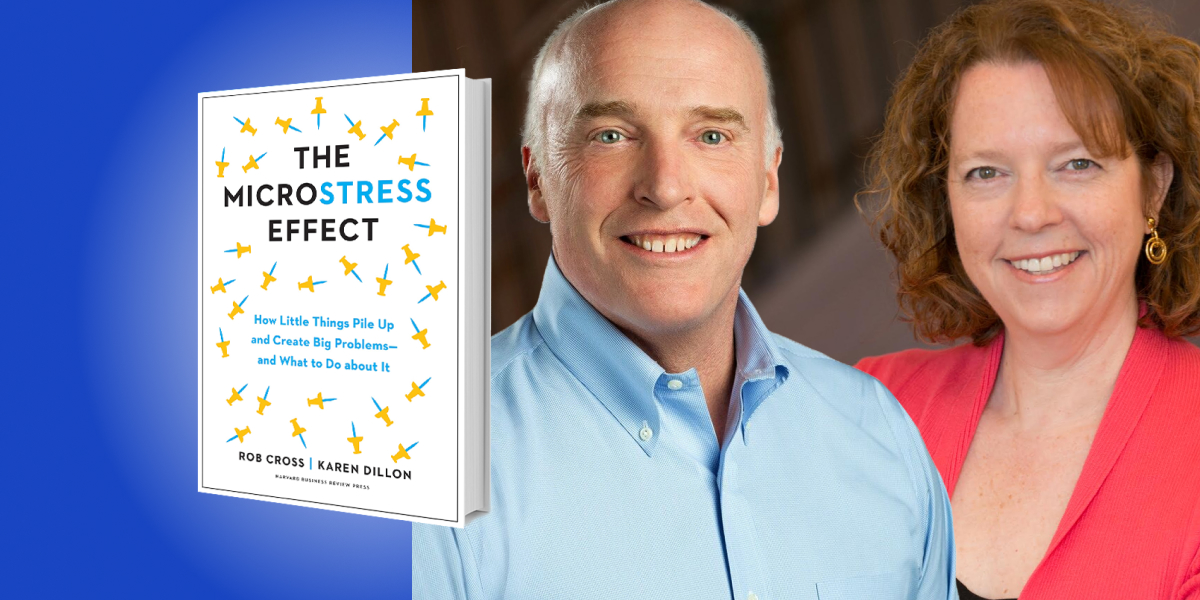
Published by Harvard Business Review Press, The Microstress Effect gives a name to one of the quietest yet most widespread forms of fatigue in modern life. Rob Cross and Karen Dillon spent years working with executives, leaders, and high-performing professionals. Their question is simple:
Why do we feel so scattered, tired, and uneasy even when there is no major crisis in our lives?
While reading this book, I found myself looking both at my own life and at the lives of many people around me. One realization stood out:
Today, most of us do not say, “I’m very stressed.”
Instead, we use more ambiguous but familiar expressions:
“I’m keeping up with everything, but nothing ever feels completely finished.”
“My mind never stops.”
“I’m not as clear-headed as I used to be.”
The book argues that the source of this feeling is not major trauma, but rather small, constant pressures scattered throughout the day. According to the authors, microstress consists of “brief, often people-generated moments of stress that are difficult to detect but, when accumulated, create significant physical, mental, and emotional consequences.”
This definition matters because what makes microstress dangerous is precisely its invisibility.
The problem is not enormous. It just keeps happening.
Viewed individually, microstress is almost insignificant. A vague message. A last-minute change in expectations. Requests that begin with “Can you take a quick look?” but never have clear boundaries. An evening email that is not urgent but occupies mental space. Thoughts that disappear in the transition from one meeting to another.
One sentence from the book captures it perfectly:
People can handle small stresses one by one, but many of them together are too much.
Because microstress does not activate our alarm system. Unlike major stressors, it does not force us to stop. The body does not send clear danger signals, so we simply continue. Yet the burden keeps accumulating.
While reflecting on this, I thought of Black Swan. Natalie Portman’s character does not experience one dramatic collapse; she gradually unravels. Everything appears to be under control until it becomes clear that it is not. Microstress works in much the same way. It is not a major event. It does not raise its voice. Yet it slowly wears us down from within.
There is a similar tension in The Bear. Nobody shouts, “I’m stressed.” But the small pressures keep building, expectations grow, and eventually the desire to control everything takes over. Watching it feels uncomfortable because it feels familiar. Often, what exhausts people most is not a major problem but a collection of small frustrations that never go away.
In the business world, the scene is often the same.
Everyone asks for something with good intentions.
Everyone says, “You can handle it.”
Nobody yells. Nobody openly pressures you.
Yet at some point, a question appears in your mind:
“When am I going to stop?”
And perhaps we should ask ourselves another question:
Is it really the work itself that exhausts us, or is it the uncertainty created in our minds while thinking about the work?
The Most Damaging Microstress: The Kind That Erodes Identity
The book groups microstress into three main categories: microstresses that reduce capacity, deplete emotional reserves, and weaken identity.
The third category affected me the most.
Small stresses that reduce capacity can often be relieved through rest. Emotional drains eventually become visible. But identity-eroding microstresses operate much more quietly.
Nobody wakes up one morning and thinks, “I’m no longer myself.”
Instead, people simply begin to feel slightly unfamiliar to themselves. The feeling never completely disappears.
Rob Cross explains it this way:
Small stresses slowly distort the way people think about who they are.
In other words, a person’s sense of self gradually fades without them realizing it.
These forms of microstress typically emerge when:
- You always feel obligated to keep up with everything.
- You continue making small decisions that conflict with your values.
- You take on responsibilities that are not yours because they seem “temporary.”
- Remaining silent feels easier than speaking up.
I see this clearly in many of the leaders I advise. People who genuinely care about their work and their values often become more reactive over time, more defensive, and less patient.
It is not as though anyone has made a major mistake.
It is more as though someone has been making small compromises for far too long.
At that point, microstress stops being a matter of fatigue and becomes a form of identity erosion.
People remember what they said yes to.
They forget what they never said no to.
This is where we need to pause and ask:
At the end of the day, are you simply tired—or do you feel as though a small part of yourself is missing?
The Solution Is Not Working Less. It Is Building Better Relationships
One of the most common misconceptions about microstress is that the solution lies solely in individual resilience.
Better time management.
More vacations.
Being mentally stronger.
The book argues otherwise.
Microstress is less about the individual and more about relationships.
Rob Cross’s research points to an important insight: the highest-performing people are less worn down because they understand how to carry and manage microstress amid intensity.
In corporate life, being accessible is often a requirement. For that reason, reducing microstress is not about slowing work down or ignoring requests. It is about distinguishing which demands are genuinely part of the job and which stem from habits or unclear expectations.
The issue is not the amount of work.
It is recognizing the emotional and mental cost of our interactions.
At first, this idea may sound complicated.
Most of us have been taught that being available, responding quickly, and keeping up with everything are positive qualities.
Yet over time, those behaviors fragment us.
The mind becomes exhausted.
And people begin to burn out from within.
The goal is not to withdraw from people.
The goal is to understand where healthy boundaries exist within relationships.
Without asking ourselves the following questions, it is almost impossible to manage microstress:
- Which people energize me, and which ones drain me?
- Which requests do I automatically say yes to?
- Whose expectations pull me away from my own priorities?
One of the clearest messages from Cross and Dillon is this:
You do not need to make your life smaller in order to reduce microstress.
You simply need to see your relationships more clearly.
Microstress is less about time than it is about relationships.
Personally, I do not see microstress as a time-management problem.
I see it as a form of fatigue that emerges when boundaries within relationships are unclear.
Today, many people say, “I don’t have enough time.”
But time is not really the issue.
The deeper question is who controls your attention, when they control it, and how.
Being constantly available.
Answering every message.
Becoming the person who handles everything.
Without realizing it, these behaviors become part of a person’s identity.
And after a while, people stop managing their own lives and begin managing everyone else’s expectations.
That is where microstress begins.
There is no major crisis.
Problems are solved through small compromises.
By feeling unable to answer a message a little later.
By failing to clarify an expectation.
By constantly postponing the word “no.”
Perhaps the real challenge is not doing less.
Perhaps it is learning to connect more consciously.
With whom.
When.
And to what extent.
Sometimes people feel relief not when they escape a heavy burden, but when they finally free themselves from a small discomfort that nobody else even noticed.
At moments like these, I think of the quieter, more human side of Leonard Cohen’s Everybody Knows.
At its core, the song is not a cry of protest.
It is more a weary acceptance.
A recognition of a weight that people quietly carry without speaking about it.
If we are honest, Cohen almost seems to whisper:
Everybody knows your heart is a little tired.
Everybody knows the burden usually falls on the same person.
Everybody knows it never makes much noise.
Everybody knows.
Microstress is exactly like that.
The burden may not be heavy.
But it always seems to rest in the same place.
Link : https://www.forbes.com.tr/forbes-life/neden-bu-kadar-yorgunuz-ama-sebebini-soyleyemiyoruz
