
Mehmet Acar, Forbes Türkiye
June 8, 2026
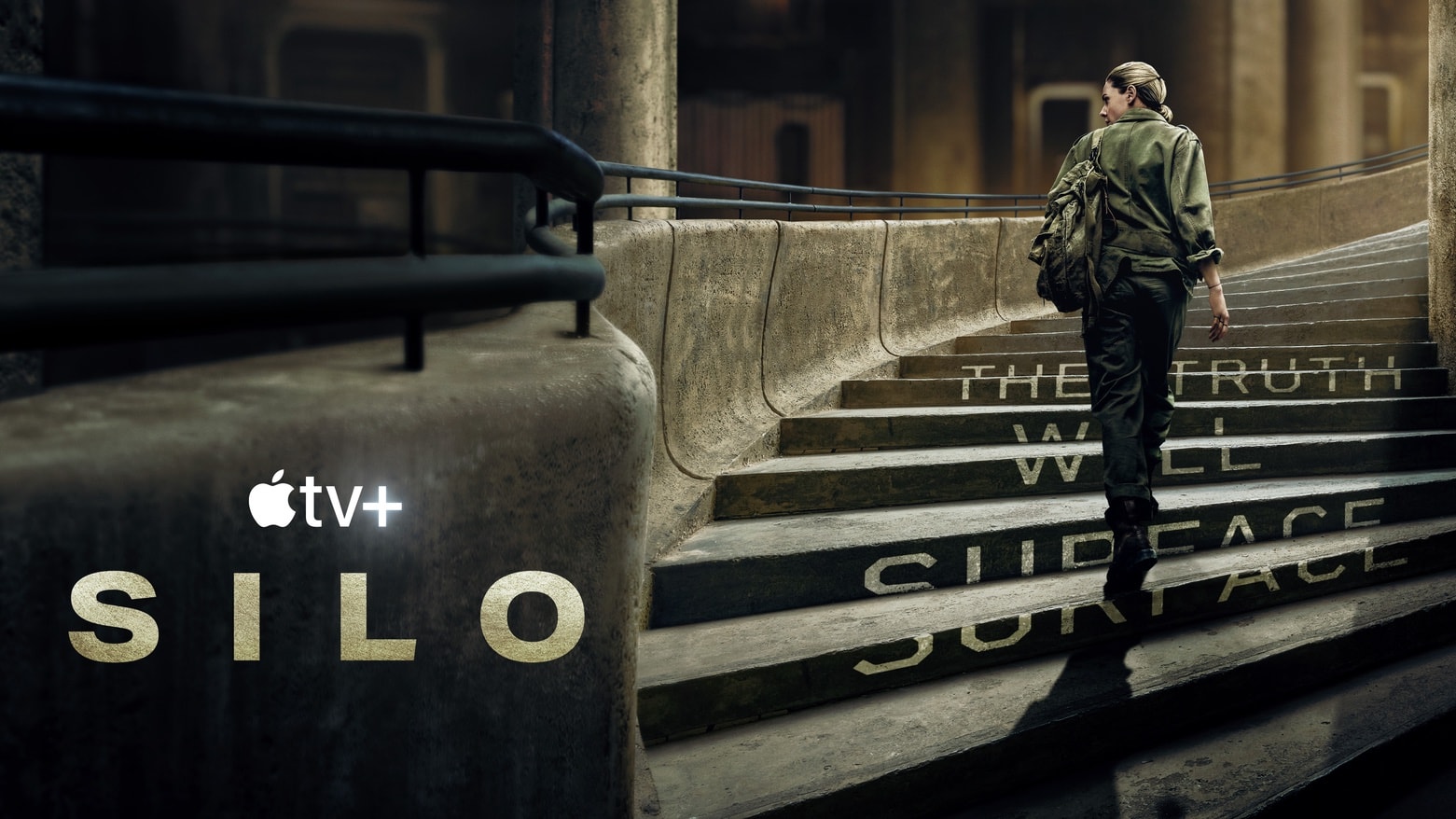
In 2023, Apple TV+ released Silo. It quickly became one of the platform’s most talked-about series.
At first glance, Silo appears to be a classic science-fiction drama. Based on Hugh Howey’s bestselling novels and adapted for television by Graham Yost, the story follows humanity’s struggle to survive underground after a catastrophic disaster.
But as the series unfolds, it becomes clear that this is not really a story about the future.
It is a story about how organizations function.
The story takes place inside a massive underground silo.
Approximately ten thousand people are born there, live there, and die there.
The residents believe that the outside world is toxic and uninhabitable.
At least, that is the story they have been told.
The rules inside the silo are simple but strict.
The past is not examined too closely.
Certain questions are not asked.
Certain answers are not pursued.
For the system to survive, people must accept not only the rules but also the narrative that supports them.
At the center of the series is Juliette Nichols, portrayed by Rebecca Ferguson, an engineer working in the lowest levels of the silo.
Yet the person who truly sets the story in motion is not Juliette.
It is Allison Becker, the wife of Sheriff Holston Becker.
Working in the silo’s IT department, Allison discovers forbidden relics from the past and a mysterious data drive uncovered by George Wilkins. As a result, she begins questioning the reality the system has constructed.
Her questions first transform Holston’s life and then Juliette’s.
In many ways, Silo begins as a chain reaction demonstrating how the curiosity of a single individual can become powerful enough to shake an entire system.
What fascinated me most about the series was not the mystery or the science fiction.
It was the way it illustrated behaviors I have observed in organizations for years.
After a few episodes, I realized I was no longer watching an underground society.
I was watching how organizations operate.
Because what I saw inside the silo reminded me of companies.
People living within the same organization but experiencing entirely different realities.
The series inspired a concept I call:
Information Altitude
Anyone interested in mountaineering understands this principle.
The higher you climb, the broader the view becomes.
The horizon expands.
Places you could not previously see suddenly come into focus.
But there is a trade-off.
The details beneath your feet disappear.
The same thing happens in organizations.
The CEO sees a different landscape than the employee serving customers.
The risks visible to a board of directors are not the same risks experienced by operational teams.
Those at the top see the horizon.
Those on the ground feel the terrain.
And most of the time, neither side fully understands the other’s reality.
One of the most memorable scenes in the first season occurs when the silo’s power system is on the verge of collapse.
For senior leadership, the crisis appears in reports and dashboards.
For Juliette and the team in Mechanical, the reality is entirely different.
They have listened to those machines for years.
They know the vibrations.
They know the sounds.
They understand things that no manual could ever explain.
When Juliette climbs inside the generator, she is not simply repairing a machine.
She is keeping the heart of the entire system alive.
Watching that scene reminded me of countless organizations I have advised over the years.
Many issues that appear catastrophic in executive meetings are routine problems for operational teams.
Those teams solve them every day through experience and improvisation.
Because critical knowledge often emerges where the work is actually being done.
Yet decisions are frequently made far away from the places where that knowledge is created.
That distance is what I call Information Altitude.
The problem is not a lack of information.
The problem is the distance between information and decision-making.
When Context Disappears
As the series progresses, Juliette encounters forbidden relics from the past.
An old watch.
A book.
A hard drive.
Objects that appear ordinary but are prohibited inside the silo.
Sometimes the past creates problems.
When people understand the past, they begin questioning the present.
The most important aspect of these scenes is not the objects themselves.
It is what they represent:
Context.
In organizations, information is not always hidden.
More often, its context disappears.
People see outcomes without understanding how those outcomes were achieved.
They see decisions without understanding the debates behind them.
Eventually, organizational memory begins to dissolve.
New leaders arrive.
Old stories disappear.
Institutions stop learning from their own experiences.
This is the second dimension of Information Altitude:
Looking at the same data and creating entirely different realities.
And this is where the second major metaphor emerges.
Strategic Ventilation
Inside the silo, clean air must constantly circulate for people to survive.
In organizations, what needs to circulate is not air.
It is ideas.
Questions.
Objections.
Customer feedback.
Observations from the field.
Important truths.
One of the series’ most unforgettable rituals perfectly illustrates this concept.
In the silo’s central cafeteria hangs a giant screen displaying the outside world.
The image comes from a camera positioned beyond the silo’s walls.
Whenever someone questions the system or asks to leave, they are sent outside.
Before they die, they are expected to perform one final act:
They clean the camera lens.
At first glance, the ritual seems meaningless.
In reality, it is one of the series’ most powerful metaphors.
Most of those who leave no longer believe the story the system has told them.
Yet once outside, they still clean the lens.
Why?
Because what they see is entirely different from the gray, lifeless world they have been shown for years.
They want the people inside to see what they are seeing.
And in doing so, they unknowingly repeat the very ritual the system has maintained for generations.
Watching those scenes, I found myself thinking:
Organizational culture is often more powerful than formal rules.
People frequently behave not according to what they think, but according to what the system has trained them to do.
This is why some organizations continue holding meetings nobody understands.
Producing reports nobody reads.
Maintaining processes nobody questions.
Practices that once had meaning gradually become rituals.
And eventually, organizations stop managing strategy.
They begin managing rituals.
Altitude Blindness
Another recurring theme throughout the series is the invisible distance between different levels of the silo.
Everyone lives inside the same structure.
Yet they barely know one another.
Those living on the upper floors rarely understand the lives of the people in Mechanical.
Those in Mechanical rarely understand how decisions are made above them.
Everyone belongs to the same system.
Yet everyone inhabits a different reality.
This brings us to the third concept:
Altitude Blindness.
As altitude increases, visibility expands.
But reality often shrinks.
Many leaders do not fail because they lack talent.
They fail because the height of their position blinds them.
They drift away from customers.
They drift away from operations.
They drift away from employees.
Eventually, they become strangers inside their own organizations.
Nucor: Reducing the Distance Between Knowledge and Decisions
One of the most fascinating transformation stories in American business belongs to Nucor.
Today, Nucor is one of the world’s largest steel producers.
Yet when the company was founded in 1940, it was not a steel company at all.
Its roots were in manufacturing small products for the automotive and electronics industries.
Everything changed during the 1960s when the company faced serious financial difficulties and Ken Iverson took over leadership.
Iverson was not a traditional industrial executive.
Much of his career had been spent on factory floors.
He understood exactly where knowledge was created.
At the time, American industry was highly centralized.
Headquarters thought.
The field executed.
Iverson believed the opposite.
The person closest to the problem understood it best.
Decisions should be made as close to knowledge as possible.
He flattened management structures.
He gave factory teams greater authority.
Solutions were sought on production floors rather than in conference rooms.
Years later, he summarized the philosophy in a single sentence:
“We don’t want to manage people. We want to remove the obstacles that prevent people from doing their jobs.”
Looking back today, it becomes clear that Nucor’s success was not merely technological.
Its real achievement was reducing the distance between information and decisions.
When Information Altitude becomes too great, organizations slow down.
Nucor recognized this earlier than most.
Shimano and the Invisible Systems That Matter
Nucor often reminds me of Mechanical in Silo.
People at the top read reports about the generator.
People at the bottom heard the generator’s heartbeat.
That difference matters.
A similar lesson can be found in Sakai, near Osaka, Japan.
In 1921, Shozaburo Shimano did not dream of building bicycles.
He dreamed of perfecting the invisible systems inside them.
Most people focused on what they could see.
Design.
Appearance.
Branding.
Shimano focused on what nobody talked about.
Gear systems.
Drivetrains.
Mechanical precision.
For decades, while everyone else looked at the showroom, Shimano looked inside the engine room.
That is why many of the world’s leading bicycle brands rely on Shimano for the components nobody notices.
The story always reminds me of Mechanical.
Nobody wants to visit the generator room.
Yet everyone depends on it.
Nobody talks about drivetrain systems.
Yet bicycles move because of them.
Leadership often falls into the same trap.
We invest in what is visible.
Yet the systems that sustain organizations are usually hidden from view.
Fastenal and the Power of Moving Closer
We see a similar philosophy at Fastenal, one of America’s most interesting companies.
At first glance, Fastenal’s business appears mundane.
The company sells industrial supplies such as bolts, nuts, fasteners, and maintenance products.
What makes Fastenal different is not what it sells.
It is how it approaches customers.
Rather than trying to understand customers through reports alone, the company moved closer to them.
Today, Fastenal teams operate inside many customer facilities.
They observe problems as they happen.
They do not wait for reports weeks later.
This demonstrates another dimension of Information Altitude.
Some organizations collect information.
Others move closer to information.
The difference is far greater than most people realize.
Seeing Customers as Stories
Some health-focused companies in California apply a similar principle in a different way.
Take Thrive Market.
At first glance, it looks like an online retailer offering healthy products.
But a closer look reveals something else.
The company is not only interested in what members purchase.
It wants to understand how they live.
What they buy.
Why they buy it.
Which health goals matter to them.
Which habits they want to change.
As a result, the company gathers more than consumer data.
It gathers behavioral data.
Many organizations view customers as transactions.
Others view customers as stories.
As a consultant, I believe the future belongs to the second group.
The Same Screen, Different Realities
The most powerful metaphor in Silo appears on the giant screen in the center of the cafeteria.
Everyone in the silo looks at the same image.
Everyone sees the same scene.
Yet everyone interprets it differently.
Some see security.
Others see threat.
Some see hope.
Others see manipulation.
Organizations are no different.
The same dashboard.
The same KPIs.
The same reports.
Yet different interpretations.
Different realities.
This is Information Altitude in its most visible form.
The same information.
Different meanings.
When I finished Silo, one question stayed with me.
Why do organizations truly fail?
Because over time, people within the same organization begin living in different realities.
Information Altitude grows.
Strategic Ventilation weakens.
Altitude Blindness increases.
And without realizing it, the organization builds its own silo.
