
Hanzade Acar
May 11, 2026
When we talk about risk management in business, we usually mean taking proactive measures before a crisis occurs.
But what about our most valuable asset our own biological capital?
In my article last month, Existing in the Age of Invisibility, I explored the struggle of individuals to reveal their unique contribution to the world. This month, I want to discuss how we can create that difference deep within our cells, beyond our genes, and how we can achieve what might be called invincible performance.
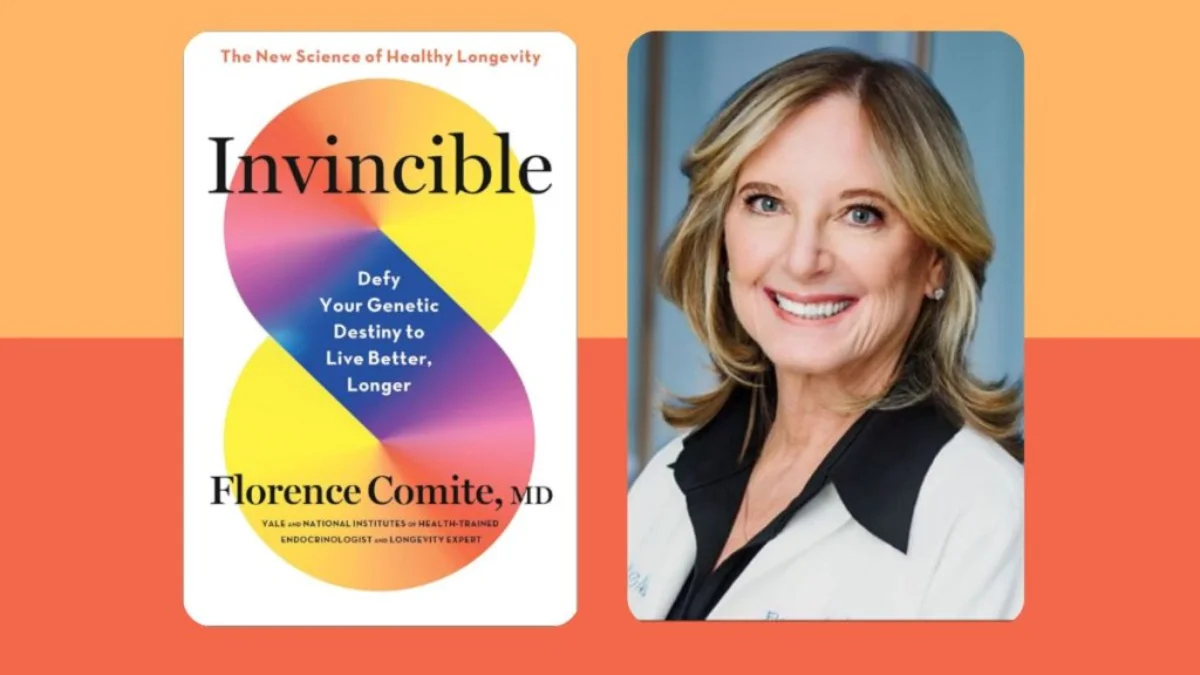
Dr. Florence Comite’s new book, Invincible: Defy Your Genetic Destiny to Live Better, Longer (Little, Brown Spark, 2026), based on research rooted in Yale and the National Institutes of Health (NIH), quickly earned a place on The New York Times Best Seller list. The book challenges long-standing assumptions.
For decades, we have been told things like:
“Diabetes runs in your family, so you’ll probably get it too.”
“Memory loss is inevitable as you age.”
Comite dismantles this conventional understanding of genetic destiny.
History’s Misconceptions and the Epigenetic Revolution: From Curse to Science
History is full of supposedly unquestionable truths that eventually collapsed under the weight of evidence.
One of the most striking examples is scurvy, the disease that haunted sailors for centuries.
Sailors believed the condition was caused by divine punishment or mysterious bad air aboard ships. After all, it seemed to affect only those who spent long periods at sea.
The reality was far simpler.
It was not a genetic disorder.
It was merely a lack of data.
More specifically, a deficiency of vitamin C.
In 1747, James Lind conducted one of history’s first clinical trials and demonstrated that citrus fruits could eliminate this “curse.” It became one of medicine’s earliest breakthroughs.
A similar misunderstanding occurred around hormones during the 1940s.
Research by Charles Huggins fueled fears that testosterone promoted prostate cancer, leading generations of men to be deprived of a hormone vital to their health.
Modern research has since challenged this “Androgen Hypothesis,” revealing that the greater risk often lies in low hormone levels rather than healthy ones.
On the women’s health side, menopause and hormone replacement therapy (HRT) were effectively blacklisted for years.
The fear created by the limited Women’s Health Initiative (WHI) study in 2002 lingered for nearly a decade before being reexamined.
Today, we know that carefully managed hormone therapy can serve as one of the strongest protective factors against conditions such as Alzheimer’s disease and cardiovascular illness.
This is where the Epigenetic Revolution enters the conversation.
If our genes the DNA sequence itself are the keys of a piano, then epigenetics is the pianist.
Your DNA does not change.
But your lifestyle, environment, and daily decisions determine which genes will be expressed and which will remain silent.
Dr. Comite demonstrates that our genes are not a sentence.
They are a set of possibilities.
Social Shackles: The Myth That “Nothing New Begins After Fifty”
Yet genetics is not the only force that limits us.
Our social assumptions often do the same.
In societies that embrace what I would call horizontal aging, it is often viewed with suspicion when someone over fifty decides to take up a new sport, build a life in another country, or make a dramatic career change.
The familiar question appears:
“At this age?”
That question can become a heavier chain than any genetic predisposition.
Age, however, is not a finish line.
It is a gear shift.
From people who begin running marathons after fifty to those who learn the piano in their sixties, countless examples show us the same truth:
Our biological software remains open to updates until we refuse to provide new input.
Rejecting the waiting-room role society assigns to you is the first step toward vertical aging.
Is Health a Luxury or a Choice?
One of the greatest misconceptions surrounding the idea of becoming “invincible” is the belief that it is a luxury available only to wealthy individuals with access to expensive technologies.
Yes, wearable devices such as Oura Ring, Whoop, and continuous glucose monitors provide extraordinary data.
But the true foundation of this philosophy is not technology.
It is discipline and awareness.
The reality is that unhealthy, heavily processed foods may appear inexpensive today.
Yet the treatment costs they generate later in life can be dozens or even hundreds of times greater than the investment required for healthy nutrition today.
The most expensive treatment is prevention that never happened.
There is no asset more valuable than your own body.
And protecting that capital does not always require great wealth.
- Taking a brisk walk outdoors is free.
- Choosing seasonal vegetables instead of processed sugary foods is a matter of decision, not privilege.
- Drinking enough water and protecting sleep as if it were sacred may be the least expensive yet most effective biohack available.
Simulating the Future: The Language of Biomarkers
As you read this article, I can almost hear the question:
“But how?”
The answer lies in one of Dr. Comite’s central concepts:
Biomarkers.
A biomarker is an objective indicator that measures a biological process, condition, or change occurring within the body.
Blood sugar levels.
Hormone profiles.
Inflammation markers.
Genetic methylation patterns.
All of these are biomarkers.
Why are they important?
Because diseases do not appear overnight.
Dr. Comite argues that by using these indicators, we can identify illnesses twenty years before they become visible when they still exist only as seeds.
Just as strategic foresight enables a CEO to identify market risks and adjust direction before a crisis emerges, biomarker monitoring allows us to change our biological trajectory before disease develops.
Today, some of the most advanced biomarker research is being conducted at institutions such as Mayo Clinic and Harvard Medical School through Omics technologies, including genomics and metabolomics.
The goal of these studies is not simply to define what is normal.
It is to determine what is optimal for you.
Data-Driven Living: The N-of-1 Experiment
We no longer need to lock ourselves inside laboratories to understand our own biological algorithms.
Comite’s N-of-1 approach essentially a personal clinical experiment has become possible through wearable technologies.
Oura Ring and Whoop
These devices do more than track sleep duration.
By measuring Heart Rate Variability (HRV), they reveal whether your nervous system is thriving or operating under pressure.
Continuous Glucose Monitors (CGMs)
Placed beneath the skin, these small sensors reveal in real time how an apple, a stressful meeting, or a poor night’s sleep affects your blood sugar.
Google’s Screen-Free Monitoring Bands
Rather than distracting users with constant displays, these next-generation devices focus on collecting data.
They monitor signals such as skin temperature and stress responses to create what is essentially a biological dashboard.
These tools are not toys.
They are the raw material leaders need to write their own operating manuals.
Vertical Aging: Muscle Mass as a Longevity Organ
One of Dr. Comite’s most influential concepts is Vertical Aging.
At its core, it is a matter of dignity.
Statistics show that many people spend the final ten to fifteen years of life in a horizontal position dependent on a bed or significantly limited in movement.
Vertical aging seeks a different trajectory.
Rather than slowly declining for years, it aims to maintain a high level of function for as long as possible before a relatively rapid conclusion.
The key lies in seeing muscle mass not as an aesthetic feature but as one of the body’s most important endocrine organs.
When muscles contract, they release signaling molecules known as myokines.
These molecules influence everything from brain health to fat metabolism.
Building muscle is not simply protection against falls later in life.
It is a form of longevity insurance for your metabolism.
Conclusion: Update the Software of Your Own Story
Blending the elegance of art, the precision of technology, and the lessons of history, this new vision of health delivers a powerful message:
We are not slaves to our genetic software.
We are the coders who update it every day.
In tomorrow’s world, truly invincible leaders will not simply manage markets with data.
They will manage their own biology with data as well.
Every data point flowing from future technologies into our lives carries the same message:
Your destiny is the sum of your decisions.
Are you ready to manage your biological capital with a proactive vision?
Because aging well is not a matter of luck.
It is a conscious strategy.
Author’s Note
Dr. Florence Comite’s Invincible is a remarkable reference work grounded in the scientific rigor of Yale and the NIH. Published by Little, Brown Spark, the book serves as a manifesto for understanding how performance can be built at the cellular level.
