
Mehmet Acar, Forbes Türkiye
May 11, 2026
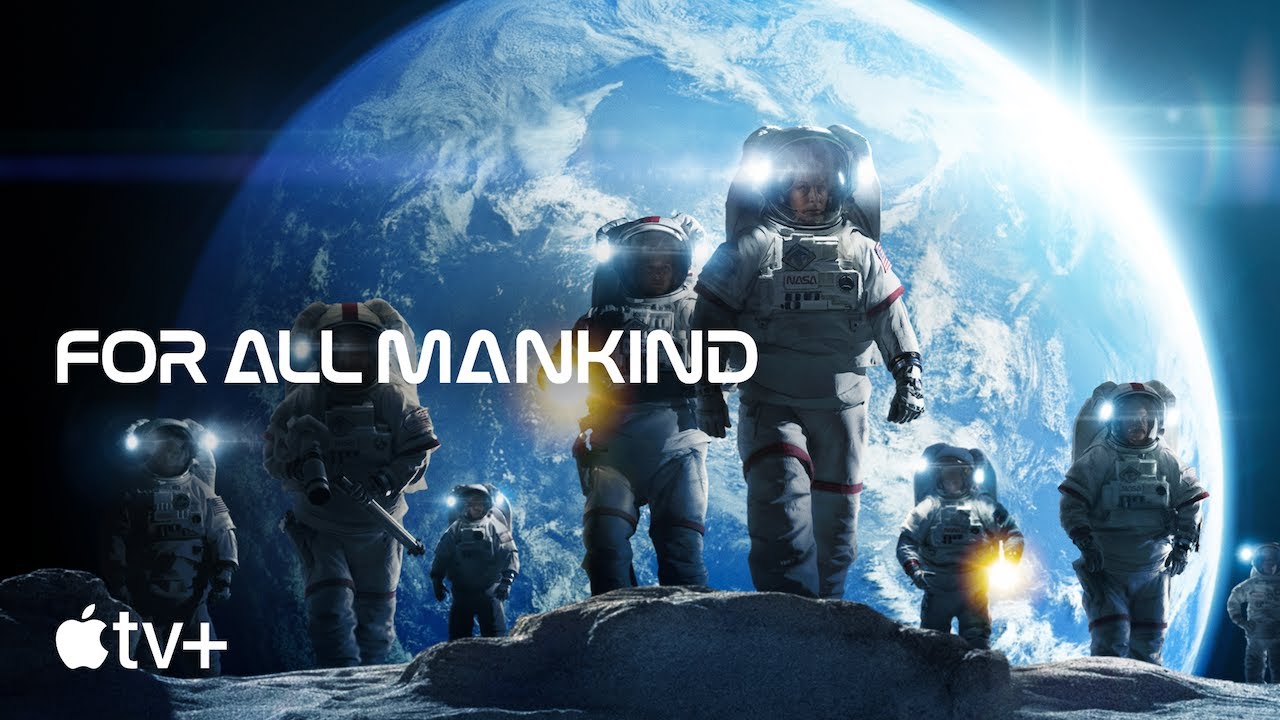
On that misty July night in 1969, time seemed to crystallize in the mission control center in Houston. The Apple TV+ series For All Mankind offers viewers a very important moment of inspiration in history. An unexpected development in the race to stay one step ahead actually turns into a spark for a giant structure, NASA, to rebuild all its existential columns. In this period, when I have moved my work to the lands where these big decisions are made, and the heart of global strategies beats America watching these scenes feels like witnessing the most impressive “Corporate Adaptation” simulation of the modern management world, rather than fiction.
Real leadership is shaped not only in moments of victory but in that first moment when the shadow of a strategic challenge falls upon you and how you turn that situation into an opportunity for growth. For All Mankind does not merely tell an alternative history of space. This production clearly explains how institutions, leaders, and societies change in times of crisis. It provides a good example for management as well. NASA was not the first to go to the Moon. At first glance, this appears to be a loss. But the series offers an interesting idea here. Sometimes institutions change not through great success, but through difficult losses. Because the comfort zone often stands in the way of innovation.
In the series, the Soviet Union’s reaching the Moon first forces America to transform not only technically, but also mentally. Now the goal is not to go to the Moon; the goal is to live continuously on the Moon. This change resembles the shifts companies are experiencing in today’s business world. Many companies start to rethink when they realize they have actually fallen behind, while they thought they were ahead. This is how major changes generally emerge.
The time jumps between Apollo in the 1970s and the race to Mars in the 1990s reveal something important. The future does not move in a straight line. Big changes do not happen with small goals. If our perspective changes, big changes follow. For companies, the real question might be this: “Do you want to be better within the existing competition, or do you want to redefine the future of the game?”
When we evaluate For All Mankind based on all these results, it is not just a science fiction series; it is the story of turning defeat into strategic advantage, of long-term thinking, and of developing a sustainable vision. And today, the clearest message given to leaders is this: Sometimes losing allows a person to think bigger. That silence at NASA is actually a step toward refocusing. Changing the path to the current goal allows the institution to update its vision with a broader perspective.
Now is the time to add a new word to the management dictionary: Orbit Strategy. This concept is about an organization breaking free from atmospheric friction meaning daily market fluctuations and competitors’ instant moves and entering the gravity of a massive twenty-to-thirty-year vision. The higher you are from the ground, the wider your field of vision. When NASA set its sights on the goal of “permanent life on the Moon” (Jamestown Base) rather than a “quick success” in this new era, it transcended the boundaries of an institution and became an architect of civilization.
When we look at the American giants in the global arena today, Amazon’s investment in logistics infrastructure rather than profit, even at the beginning of its journey, and Nvidia’s focus on future processor architectures ten years ago, are the most successful reflections of this strategy on earth. From my global consultancy perspective, many structures I examine can only truly settle into orbit when they focus on the “climate” rather than the daily “weather.”
Let’s remember that risky discovery journey undertaken in the first season with the hope of finding water on the lunar surface. That breathtaking moment when the astronauts tried to land in the Shackleton Crater, which was completely dark and full of unknowns, represents an institution’s will to “act with data” even in the most difficult market conditions. Gliding fearlessly into that darkness is not just a success of piloting; it is a strategy of transforming uncertainty into a concrete resource (water).
This transformation process tells us that diversity is not an option, but a necessity of Cognitive Cross-Pollination. The scenes where NASA fundamentally changes its talent pool with radical agility to adopt an inclusive structure prove that minds from different disciplines and backgrounds coming together around a shared goal is the purest form of innovation. We can give the most concrete example of this from Pat Riley, one of the most iconic leaders in American sports history. When he took over the Los Angeles Lakers in the early ’80s, Riley, who combined existing talent with a new game rhythm (Showtime), succeeded in bending the conditions to his own vision rather than criticizing them. As Riley emphasized, excellence is the reward not for those who just adapt to conditions, but for those who can build a new game from those conditions.
On the technical side of this visionary transformation, we see engineers who perfect the process by filtering priceless data from every trial. Here, our second key concept appears: Fail-Mining. In this model, no setback is an end; it is the most valuable component of the next success. In the modern business world, the strongest representative of this vision is SpaceX. This structure, which actually fits a ten-year learning process into a few months with every trial prototype, directly transforms data into strategic capital. The most inspiring structures I observe in global markets are those that record the learning process in their inventories, not as a cost item, but as an “intellectual capital” entry.
Another one of the most tense and strategic scenes in the series is the technical crisis that occurs during a refueling in orbit. The instant solutions developed by the astronauts under the pressure of limited oxygen and time to ensure that two opposite systems (hardware) work in harmony are actually a perfect example of agile decision-making mechanisms in the management world. That moment of crisis stops being a “disaster” scenario and becomes a Radical Co-opetition manifesto, showing how two different technologies can be stretched toward a common purpose. The strategic partnerships formed by market giants to develop a common standard or to grow the pie are the pinnacle of professional maturity. The common technological protocols developed by Apple and Google during global crisis periods are the terrestrial projections of this docking in space. My observation in the global arena is clear: It is no longer just “individual success,” but the discipline of “rising together with the ecosystem” that creates lasting value.
So, what really makes this race stand out? I think the most important issue here is Chronological Leverage. This concept is the ability to manage time by thinking beyond today’s market. The competitor only wants to maintain existing standards. You, however, are bringing future events to life now. For example, the nuclear thermal rockets shown in the series are a good example of this. Let’s formalize this situation with an example from the world of graphic design: Adobe’s transition to a cloud-based system (Creative Cloud) was driven by a desire to dominate the future of design, even though the market was not yet fully ready. They set the time according to their own desires and became effective in the sector.
When we evaluate this entire picture from the big perspective, whether you are a space agency or a global technology company, what determines your fate is not the challenges you face, but the strategic response you give to them. For All Mankind proves how the delay of an expected success can actually turn into the most powerful launchpad. This process, when analyzed correctly, is the most important wind that makes institutions more agile and resilient.
In my work in the global arena, there is a truth I have seen personally from the center of these strategic decisions: The world now applauds not just “what exists,” but the one who “imagines the future today and writes its rules.” History writes not only about those who reached the goal, but also about the visionaries who turned every obstacle encountered along the way into a stepping stone. If you want to draw your own orbit, sometimes you need a motivation strong enough to go outside of gravity (habits). Real development does not emerge when everything is going well; it begins when you have the courage to look at things from another angle. While calling out to you from the very middle of big plans and business, I understand this better: The future will belong to those who know yesterday and have courage today.
Link : https://www.forbes.com.tr/forbes-life/yorunge-stratejisi-maglubiyetin-firlatma-rampas
